

cybermad
Clan Leader
- Modelo
- Z3 2.8 / GR86
- Registrado
- 11 Feb 2008
- Mensajes
- 109.668
- Reacciones
- 96.303
NEW Lamborghini Sian FKP 37: 808 hp, V12 Hybrid Supercar - First Drive Review | Carfection 4k
•6 mar 2021

El Lamborghini Sian FKP 37 es un superdeportivo híbrido de 808 hp con un enorme V12 de aspiración natural de 6.5 litros que suena glorioso. Su apariencia de nave espacial encaja con el sistema híbrido en el interior, el primer sistema híbrido con supercondensador del mundo, que está escondido en el interior. Entre 2 y 3 millones de dólares cuesta mucho, pero vale la pena.
#Lamborghini #LamborghiniSian # V12 # Híbrido
Cuando Lamborghini dice que puede tener unas horas al volante de su primer superdeportivo híbrido de producción, no dejará que un lluvioso día de invierno británico se interponga en su camino. Así que me encuentro en el corazón de la campiña británica con las llaves del Lamborghini Sian FKP 37 en la mano y el circuito de pruebas alpinas y el tazón de alta velocidad del campo de pruebas Millbrook a mi disposición.
El Sian es una novedad para Lamborghini: un superdeportivo híbrido suave. Su nombre proviene de la palabra boloñesa para relámpago. El apéndice alfanumérico se refiere a las iniciales del ex director del Grupo Volkswagen, Ferdinand Piech, el hombre responsable de incorporar a Lamborghini a la cartera del Grupo, y 1937, el año de su nacimiento. Solo se construirán 63 ejemplares, en conmemoración de la incorporación de Automobili Lamborghini en 1963. Naturalmente, ya se habla de cada automóvil.
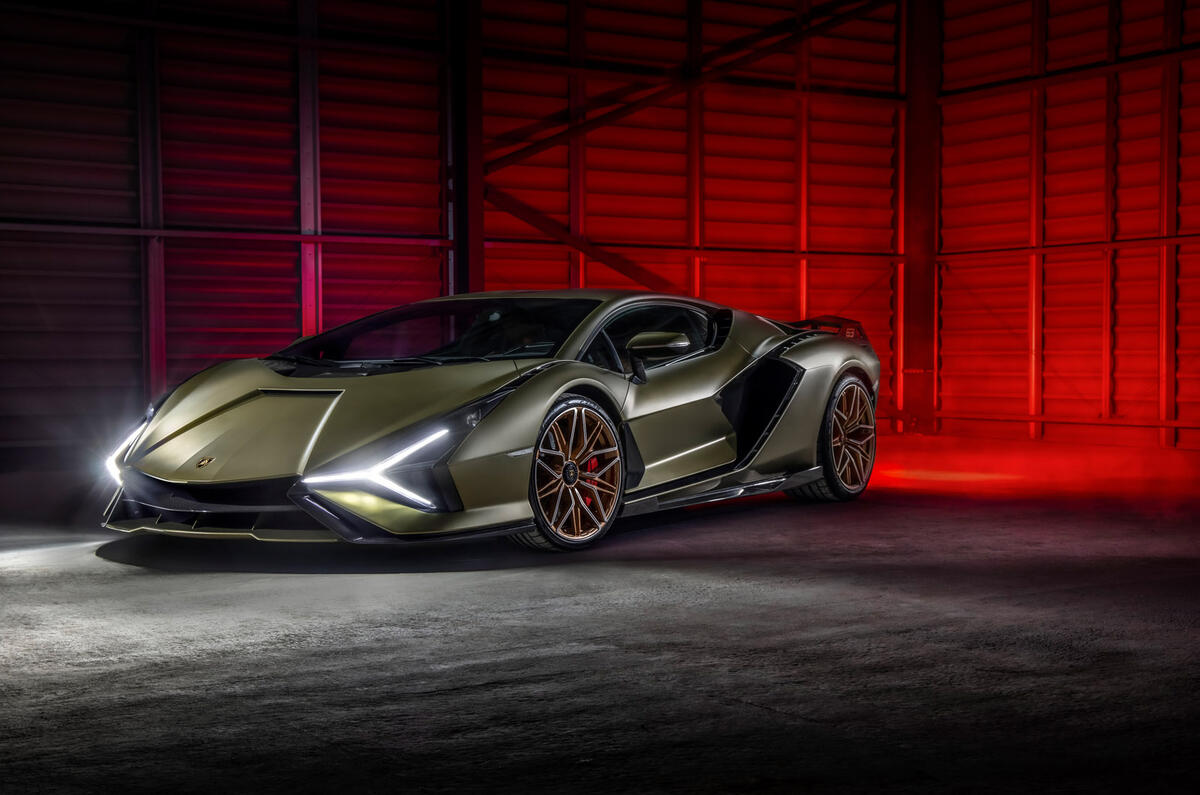
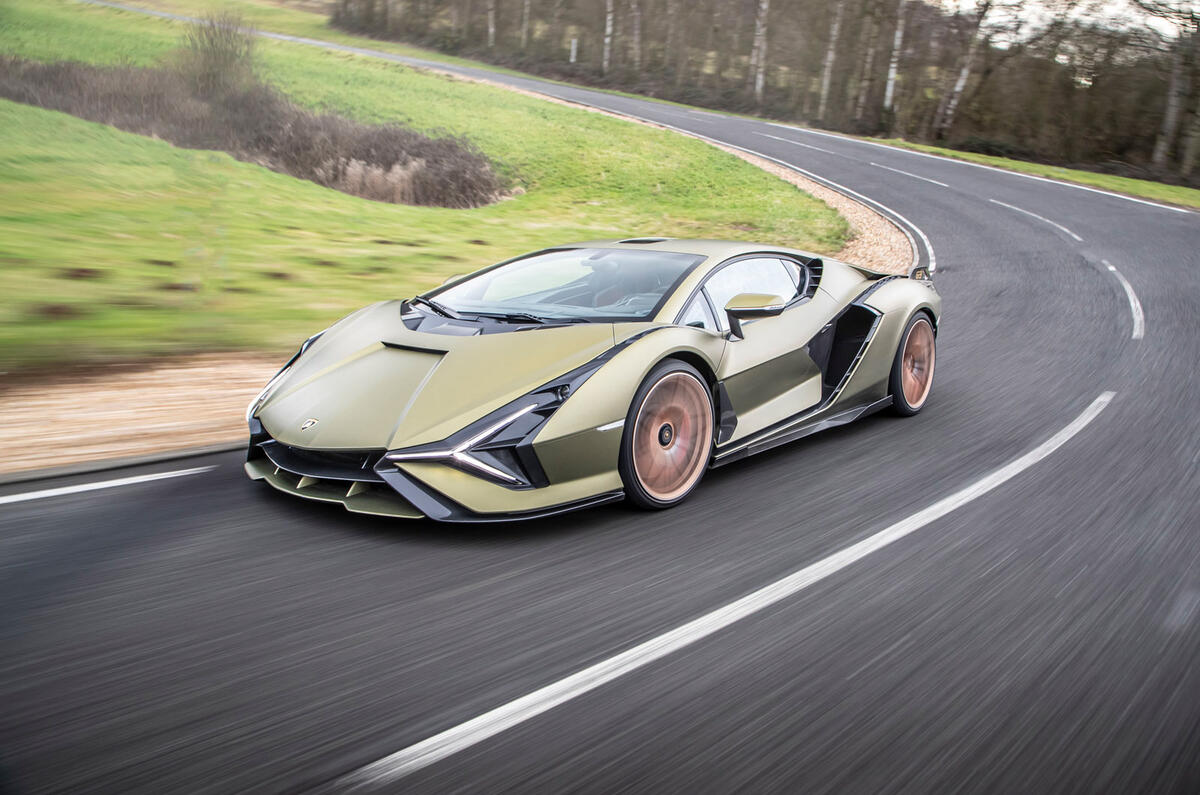
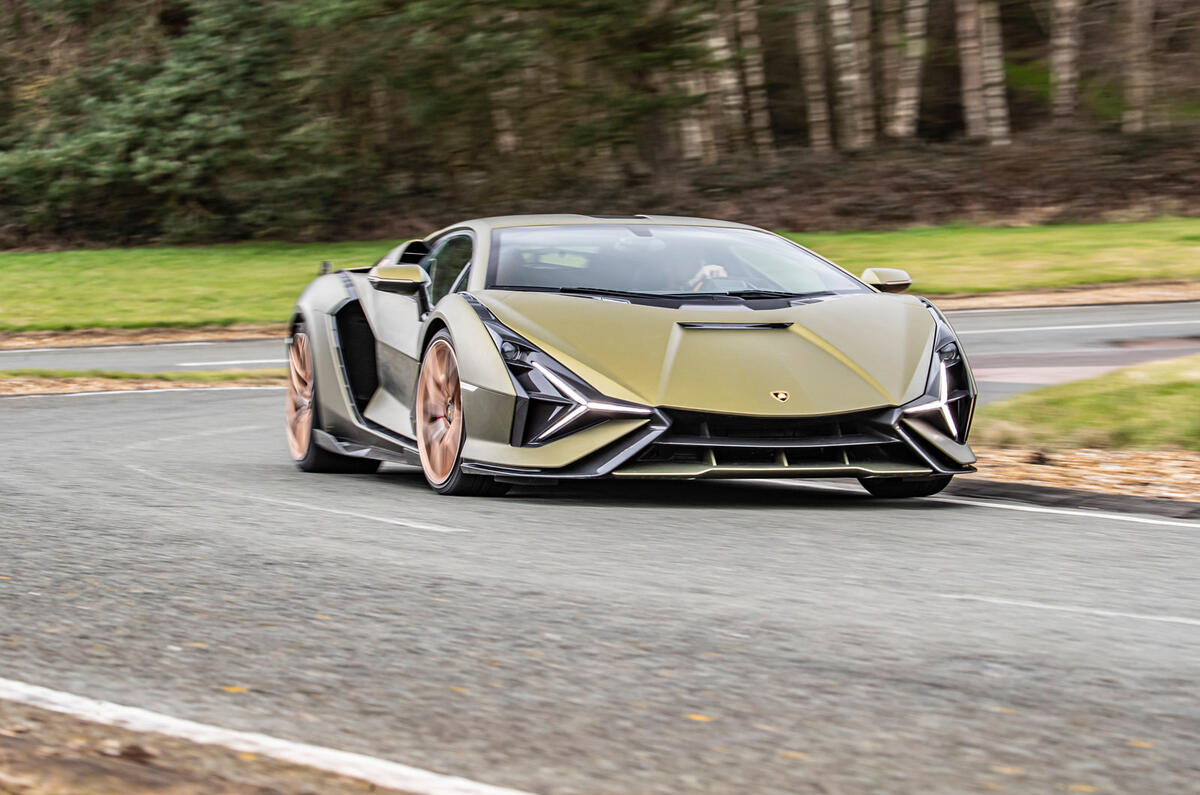
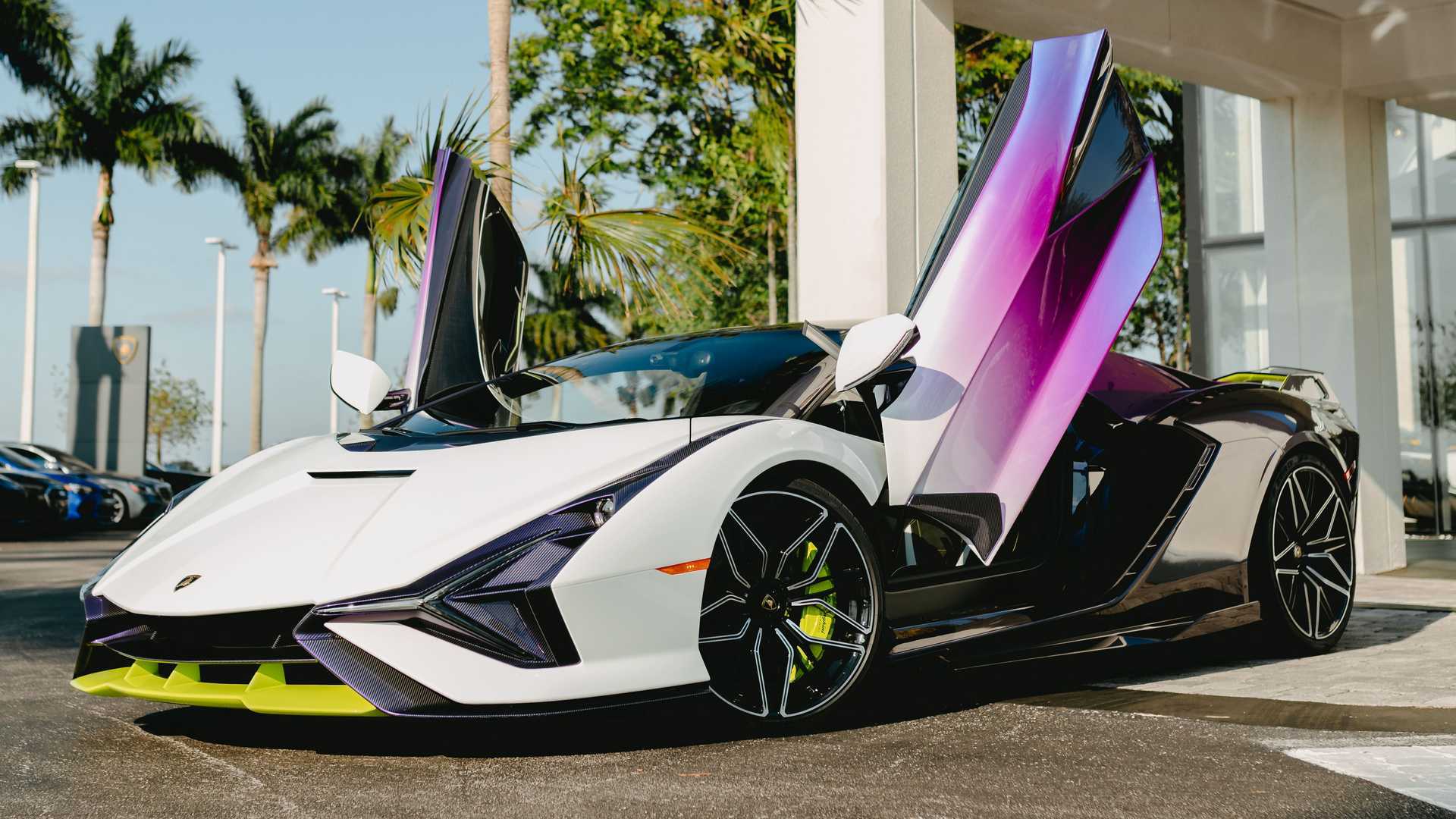
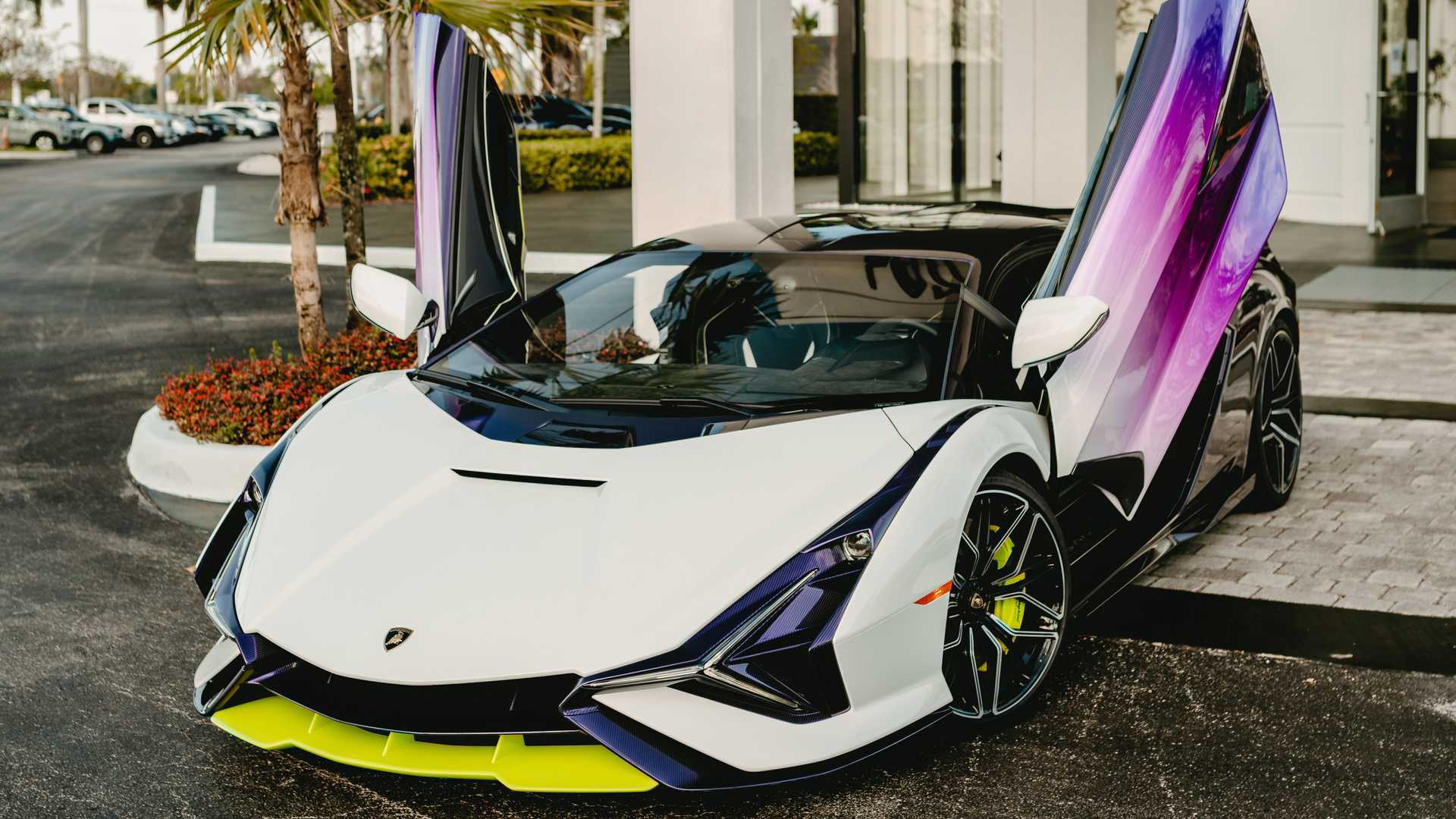
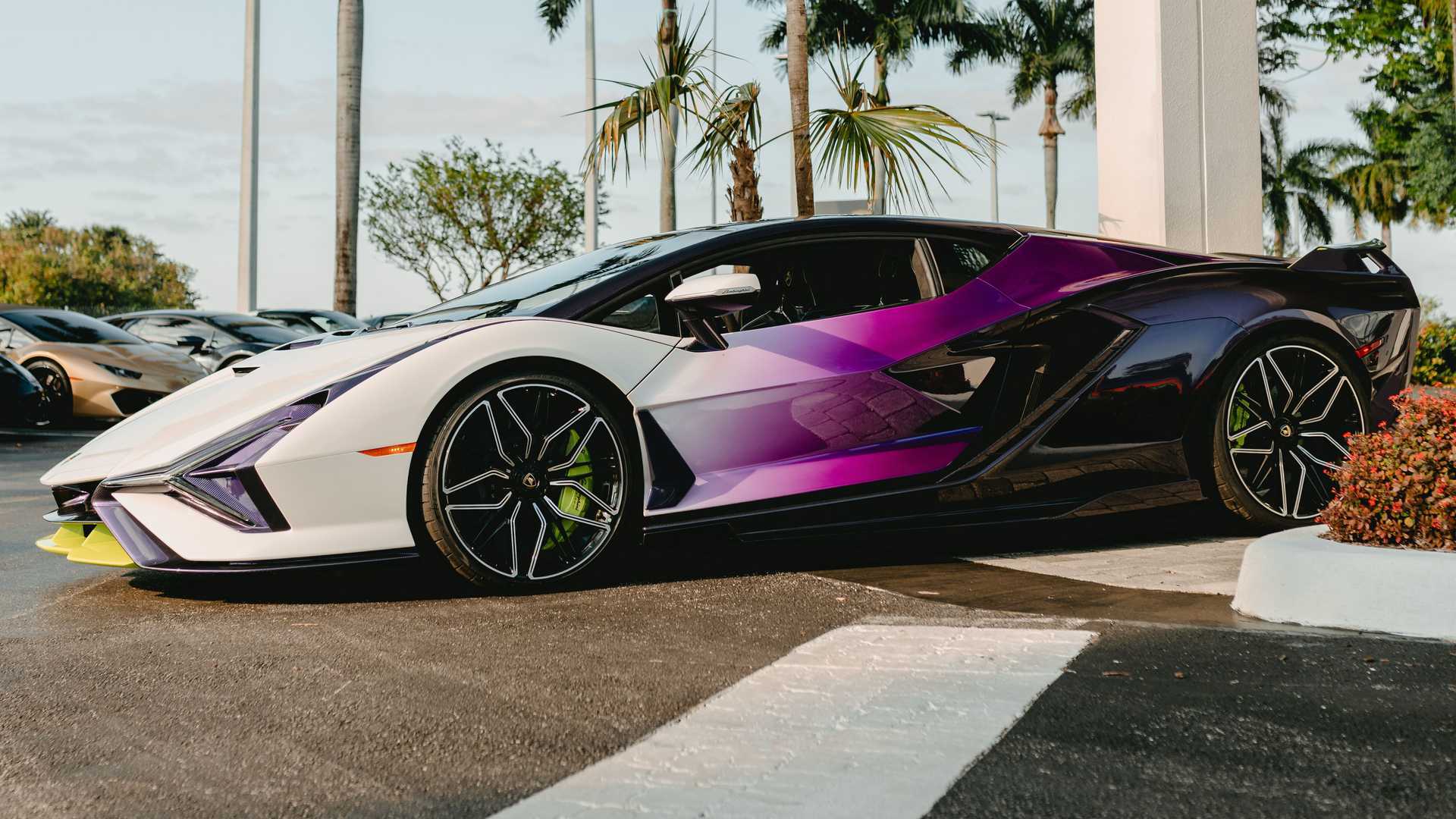
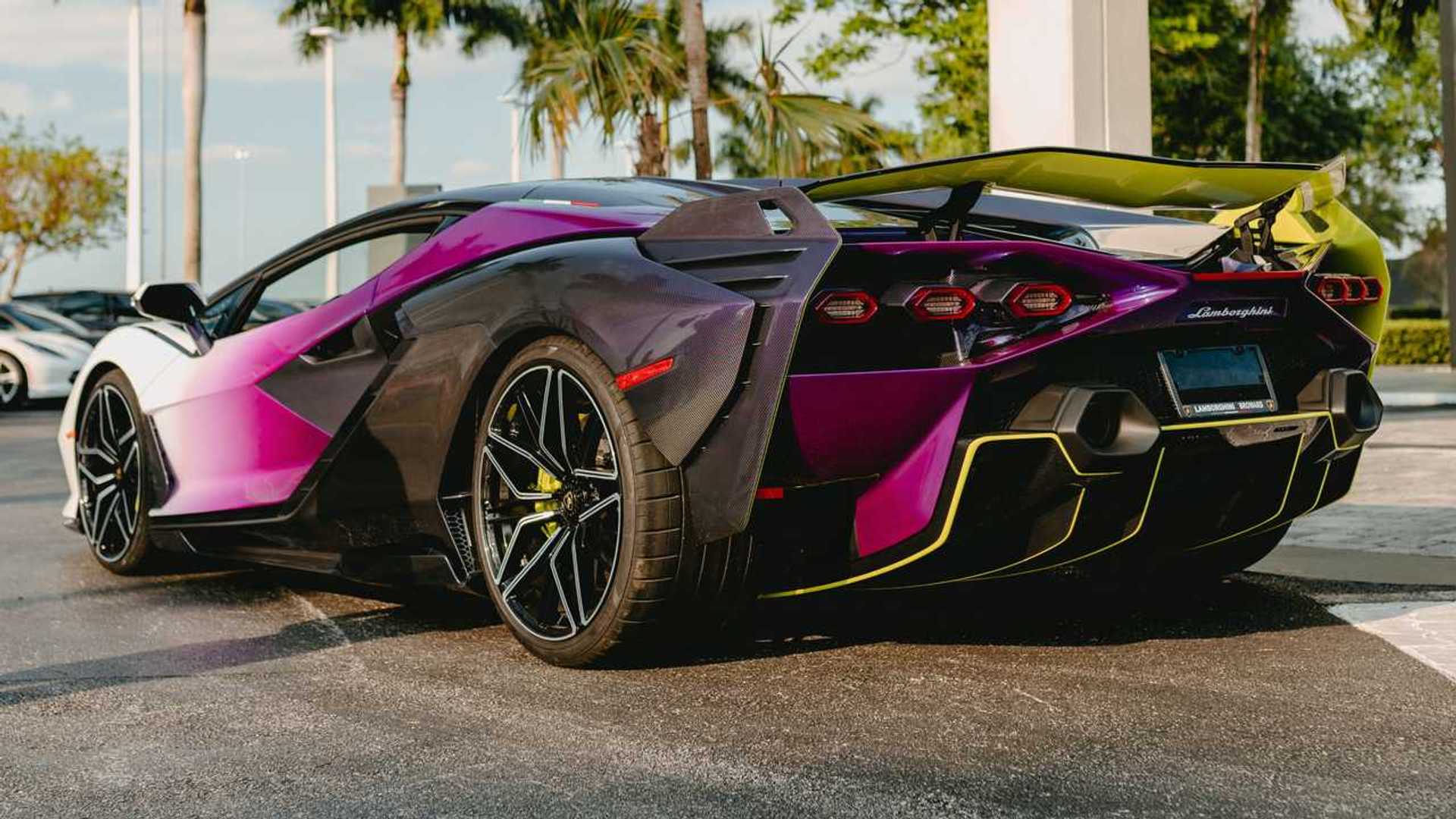
A la vista, el Sian activa los mismos neutrones que se dispararon cuando vi por primera vez una foto del LP400 Countach. Como todos los mejores Lamborghinis, el diseño del Sian parece haber sido tomado directamente de la imaginación de un niño emocionado.
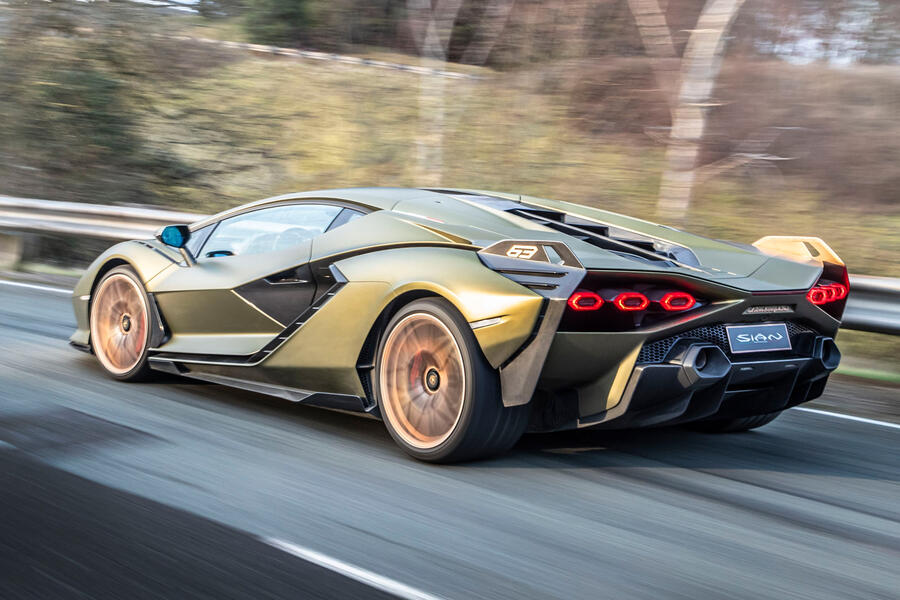
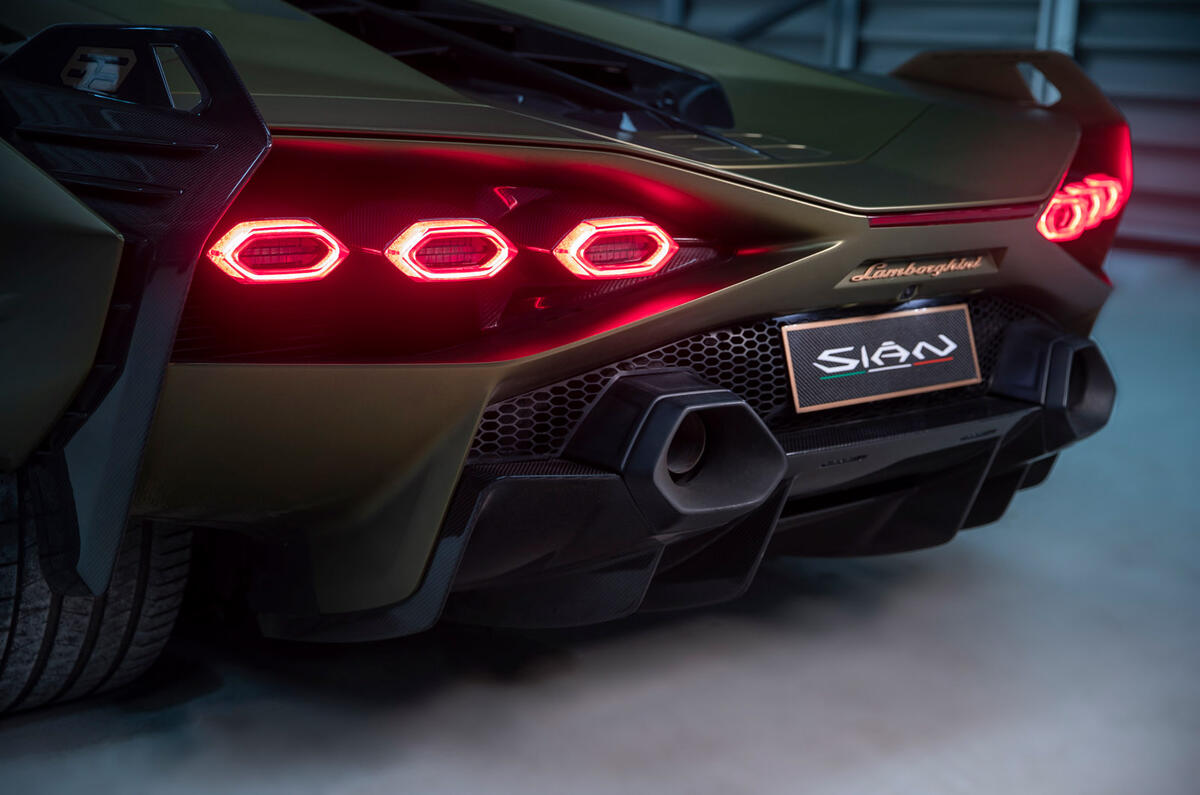
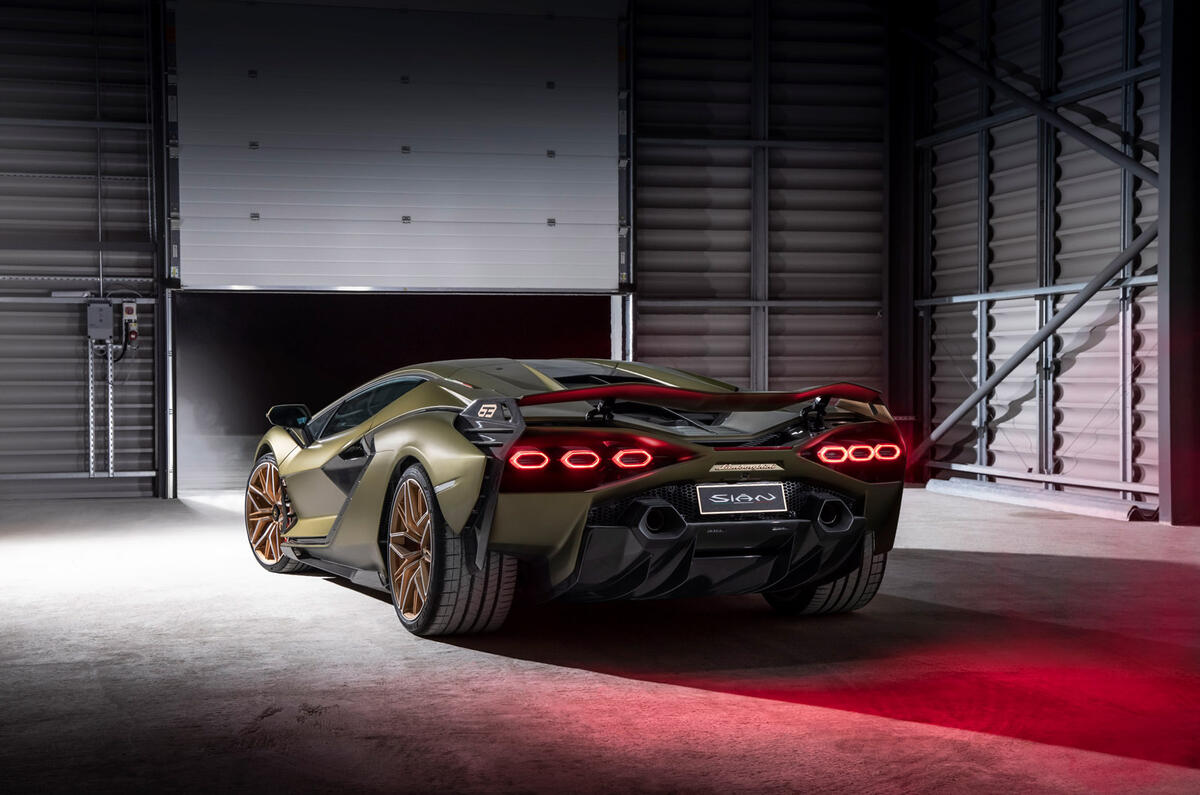
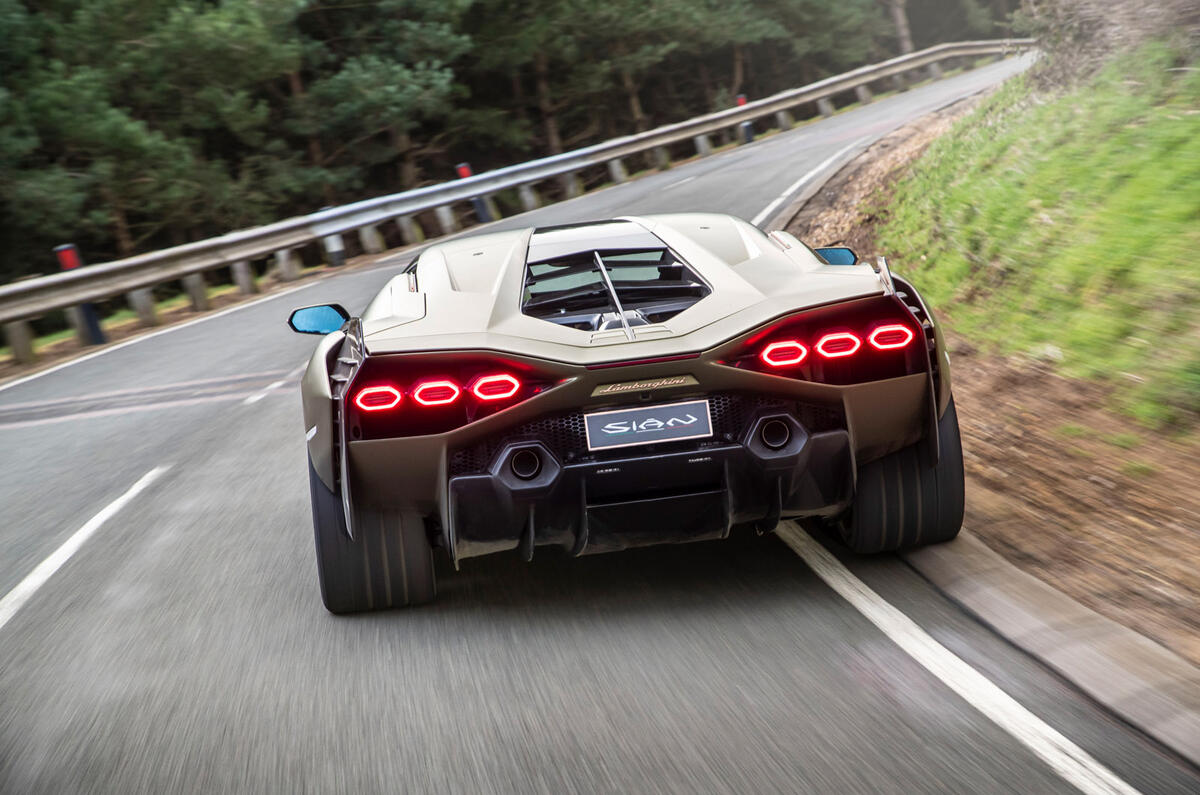
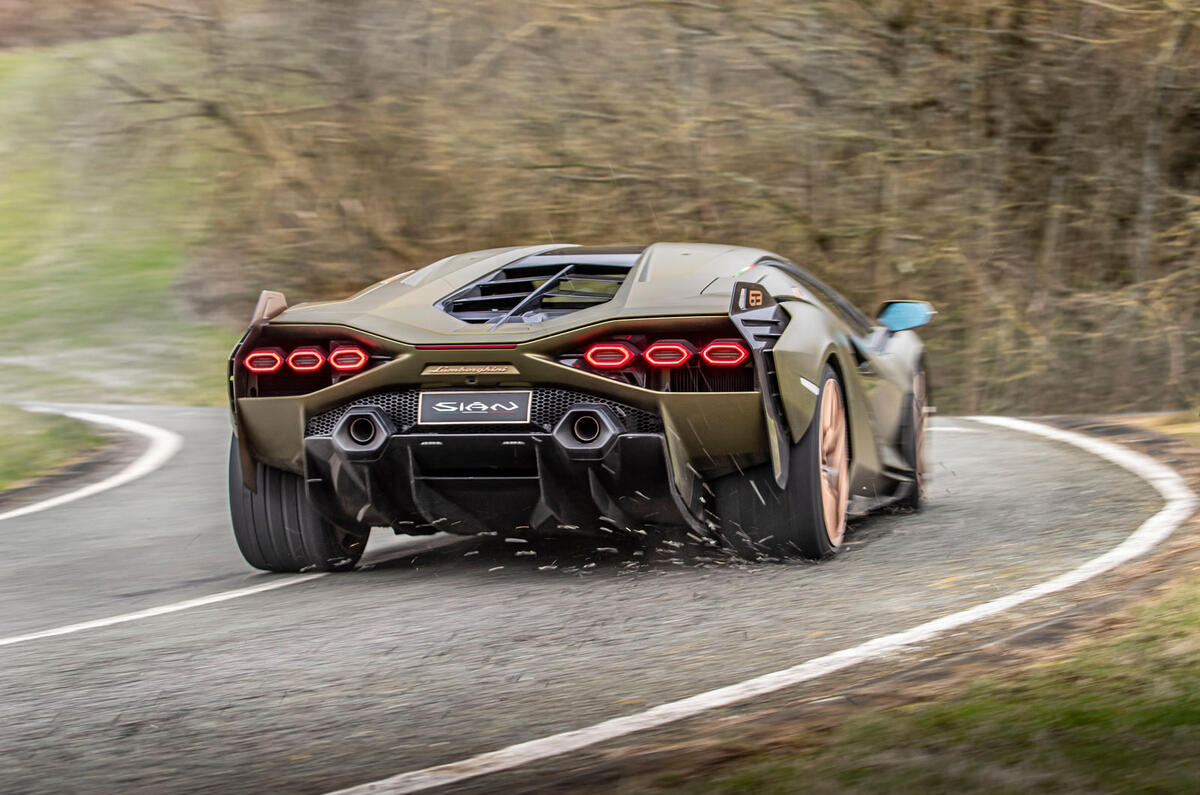
Pero incluso para los estándares normales de Lamborghini, el Sian parece futurista y salvaje. Mitja Borkert, el jefe de diseño de Lamborghini, hizo todo lo posible para darle al Sian una cantidad especialmente grande de detalles llamativos, con pliegues y recortes en todas partes, llevando al Sian hasta la línea de verse ridículo sin realmente cruzarlo. Quiero decir, tiene aletas que no se habrían visto fuera de lugar en un Cadillac Eldorado de la década de 1960. Es una elección audaz.
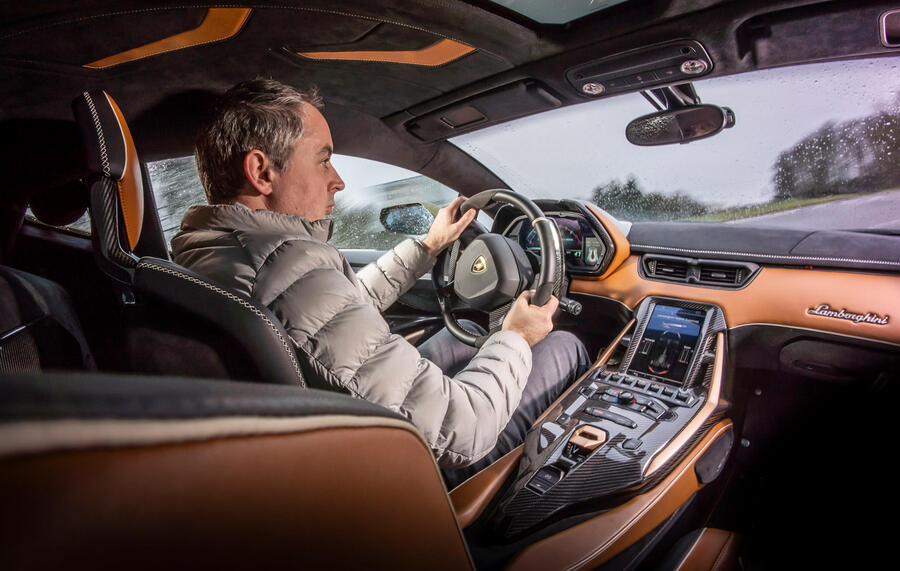
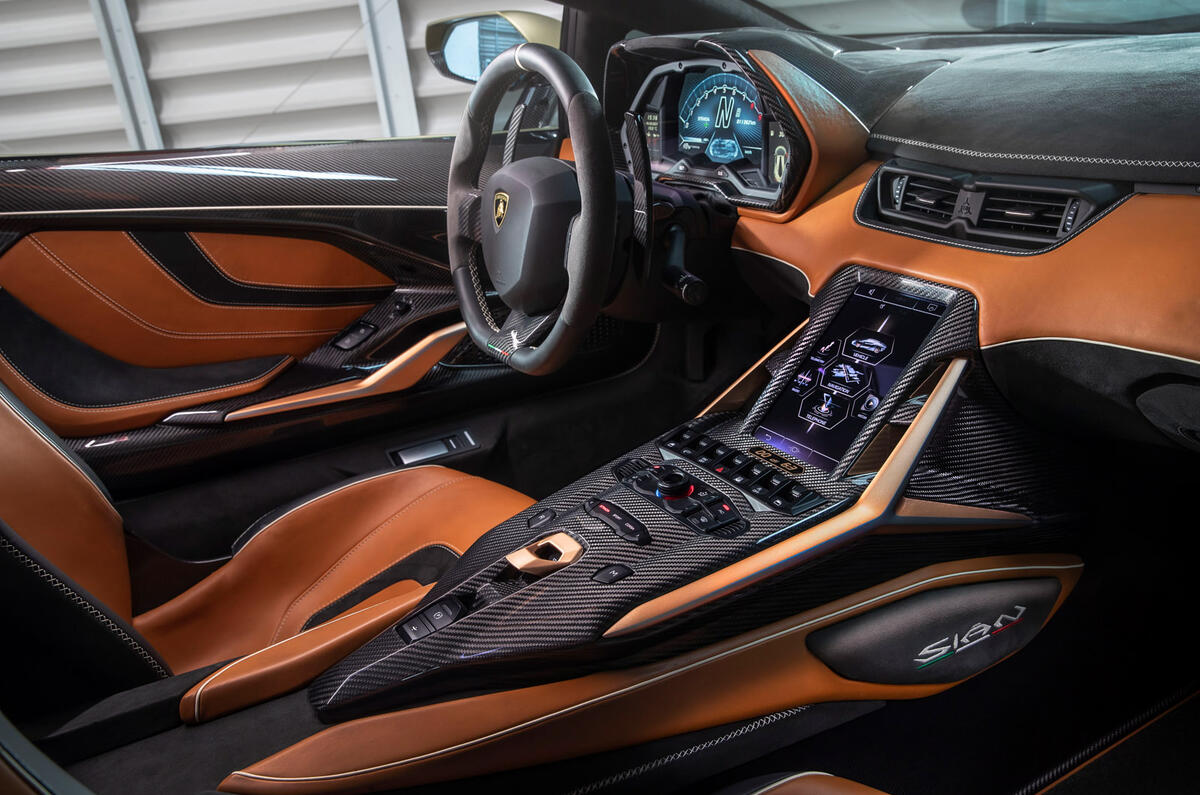
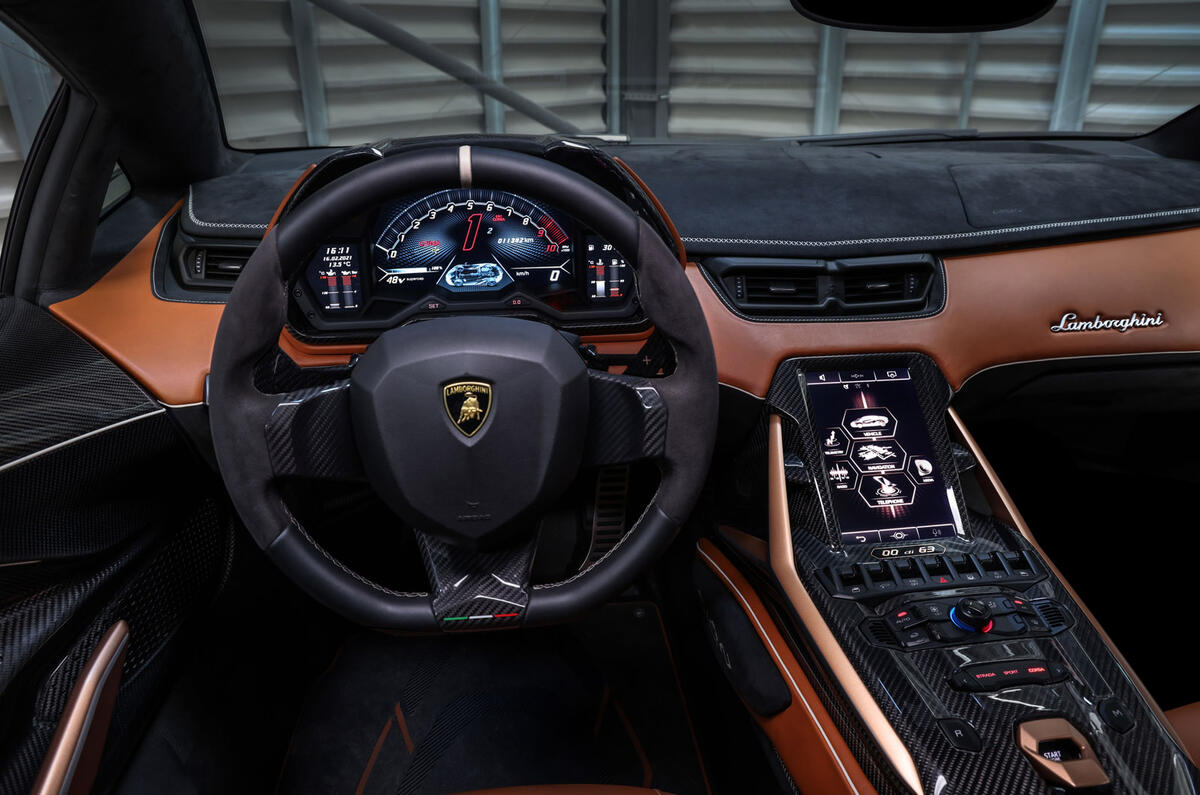
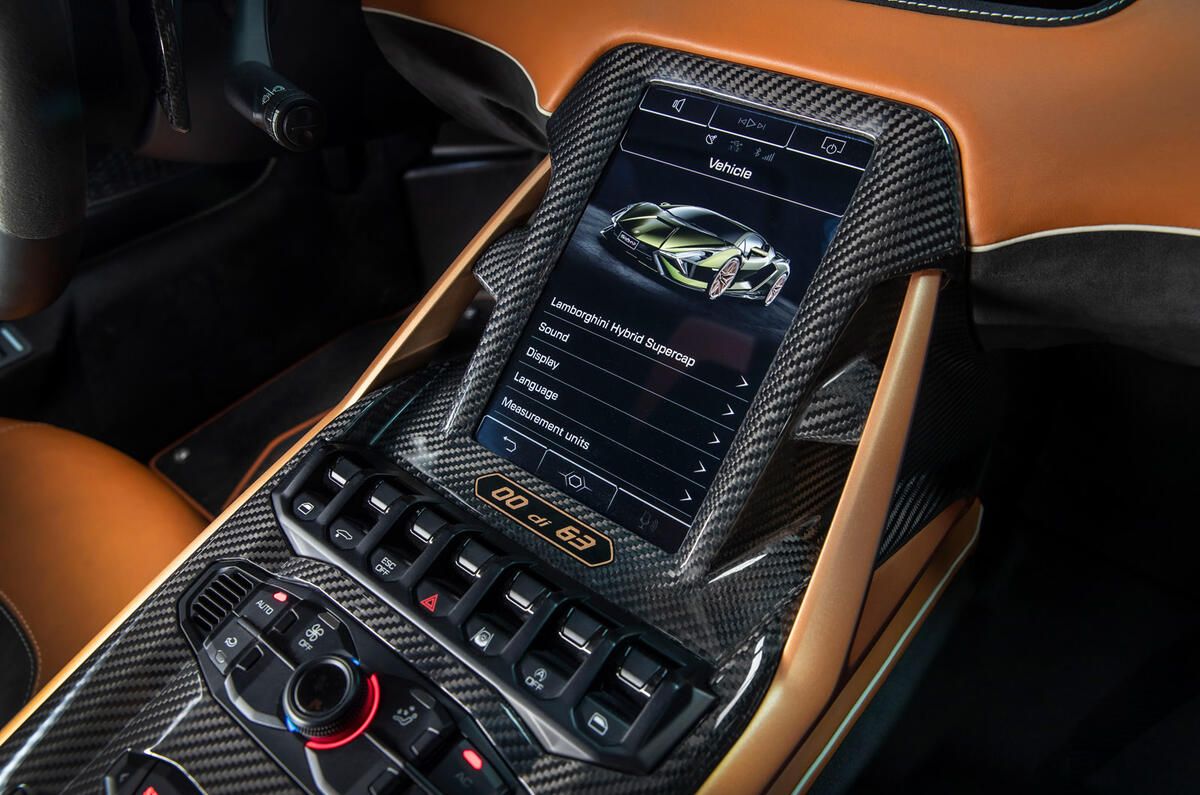
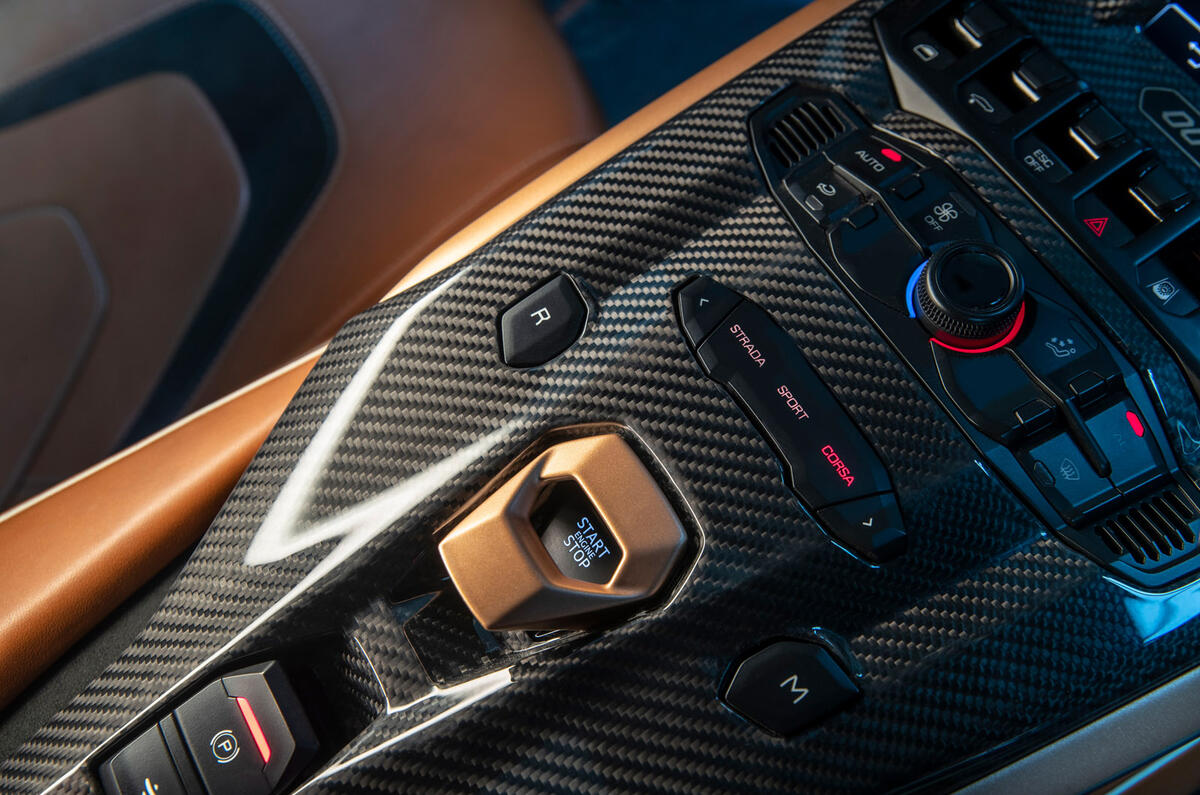
El interior, por el contrario, es bastante sobrio, en la escala de Lambo, de todos modos. El volante es especialmente espartano sin un solo botón o interruptor. El Sian tiene la misma pantalla de infoentretenimiento más grande y orientada a retratos que el Huracan Evo, aunque su posición está lejos de ser conveniente, se encuentra bastante bajo y lejos del tablero. Aún así, hace que la cabina se sienta más contemporánea que la de, digamos, el Aventador. Desde el protector estilo llave de misil para el botón de arranque del motor hasta la bien formada carcasa impresa en 3D para las salidas de aire y el letrero del supercondensador iluminado, todavía hay muchas florituras para que usted y todos los que lo rodean piensen que está conduciendo un astronave.
Pero lo más importante del Sian es lo que hay debajo de la piel. El Sian se basa en el Aventador SVJ, con un chasis y suspensión idénticos, y el mismo motor V12. El Sian, sin embargo, agrega un motor eléctrico para hacer el primer híbrido de producción de este Lamborghini.
Un poco de historia: en los tiempos pasados de 2013, cuando Ferrari, McLaren y Porsche lanzaron su llamada santa trinidad de superdeportivos híbridos, Lamborghini estuvo notablemente ausente. En ese momento, el entonces CEO de Lamborghini, Stephan Winkelmann, descartó al Ferrari LaFerrari, McLaren P1 y Porsche 918 Spyder como comprometidos y con sobrepeso. Agregar grandes baterías de iones de litio a un superdeportivo simplemente no estaba en la hoja de ruta de Lambo. Avance rápido unos años y Lamborghini mostró al mundo cómo ingresaría al mundo de la electrificación, presentando el Sian FKP 37 en el Salón del Automóvil de Frankfurt de 2019.
¿Qué es un supercondensador? Cualquiera que haya desmontado un dispositivo roto se habrá encontrado con estos pequeños cilindros soldados a placas de circuitos. Su capacidad para almacenar y desplegar rápidamente grandes cantidades de energía los convierte en excelentes alternativas a las baterías cuando el tiempo de recarga ultrarrápido es un beneficio y su rápido agotamiento no es un problema. Una linterna que usa un supercondensador en lugar de una batería solo puede funcionar durante una hora, pero se recargará en 60 segundos.
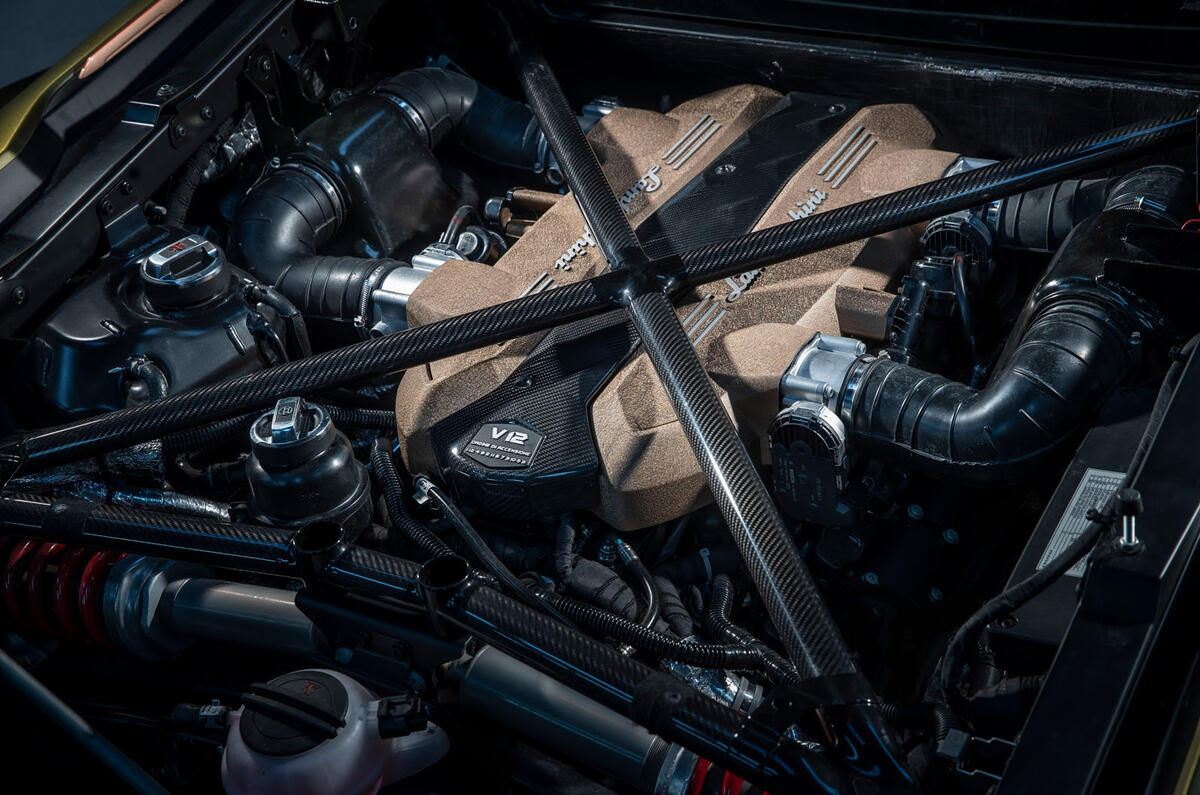
El V12 de 6.5 litros de aspiración natural de Sian es el mismo motor que encontrará en el Aventador SVJ, solo que con válvulas de entrada de titanio y algunos ajustes en la ECU. En el SVJ, estos motores producen 759 hp; en el Sian, 774 CV. Agregue los 34 hp del motor eléctrico y obtendrá la asombrosa potencia total de 808 hp. Eso es en un automóvil que cuesta entre $ 2 millones y $ 3 millones, según las especificaciones, fácilmente cuatro veces el precio de etiqueta del Aventador SVJ.
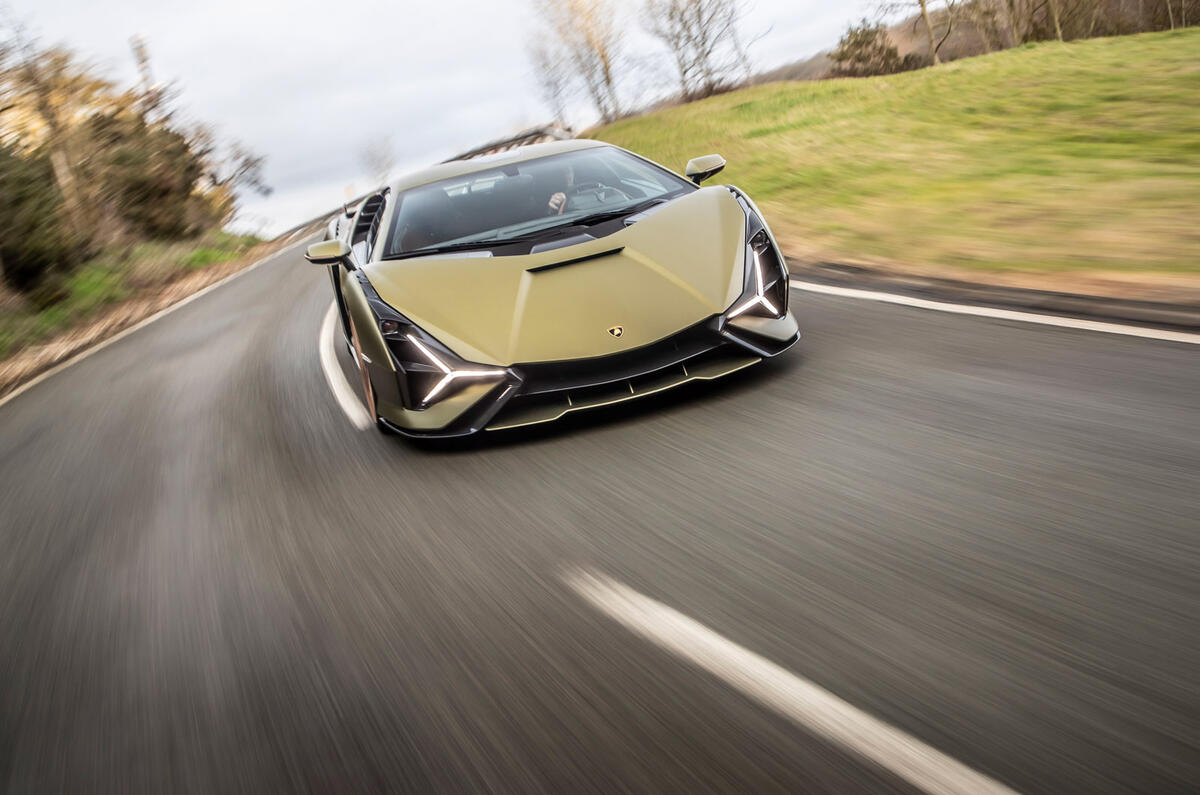
Para ambos autos, acelerar a 62 mph toma 2.8 segundos y sus velocidades máximas son de 217 mph. Fuera de línea, los beneficios del motor eléctrico de Sian son mínimos. Sin embargo, a velocidades más altas, el motor eléctrico llena los espacios donde podría faltar el par, lo que permite una aceleración más suave y rápida a alta velocidad.
--------------------
The Lamborghini Sian FKP 37 is a 808hp Hybrid supercar with a massive 6.5 litre Naturally Aspirated V12 that sounds glorious. It's spaceship looks are fitting of the hybrid system inside, a world's first Supercapacitor powered hybrid system, that's hidden inside. At between 2-3 million dollars it costs a lot, but it's worth it.
#Lamborghini #LamborghiniSian #V12 #Hybrid
When Lamborghini says you can have a few hours behind the wheel of its first production hybrid supercar, you're not going to let a rainy British winter's day stand in your way. So I find myself in the heart of the British countryside with the keys to the Lamborghini Sian FKP 37 in my hand, and the Millbrook proving ground's alpine test circuit and high-speed bowl at my disposal.
The Sian is a first for Lamborghini: a mild-hybrid supercar. Its name comes from the Bolognese word for lightning. The alphanumeric appendix refers to the initials of former Volkswagen Group head Ferdinand Piech -- the man responsible for bringing Lamborghini into the Group's portfolio -- and 1937, the year of his birth. Only 63 examples will be built, commemorating the incorporation of Automobili Lamborghini in 1963. Naturally, every car is already spoken for.
On sight, the Sian activates all the same neutrons that fired when I first saw a photo of the LP400 Countach. Like all the best Lamborghinis, the Sian's design appears to have been lifted directly from the imagination of an excited child.
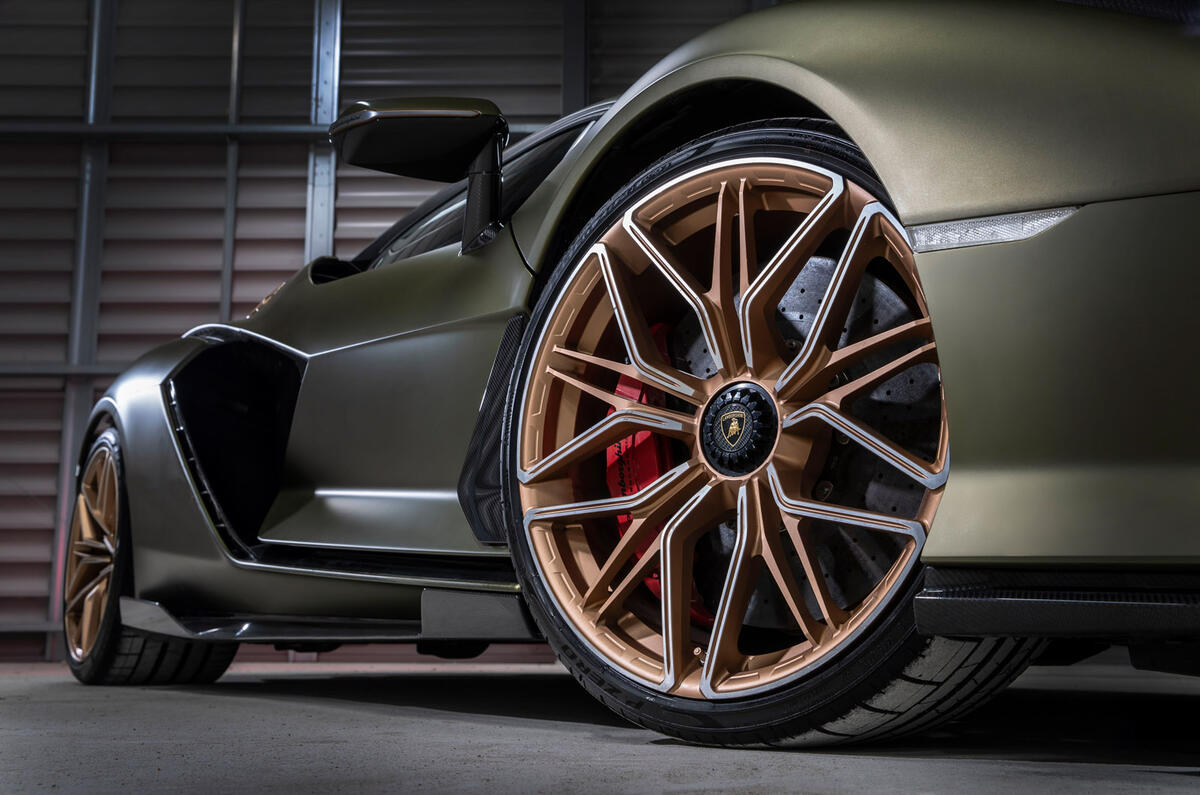
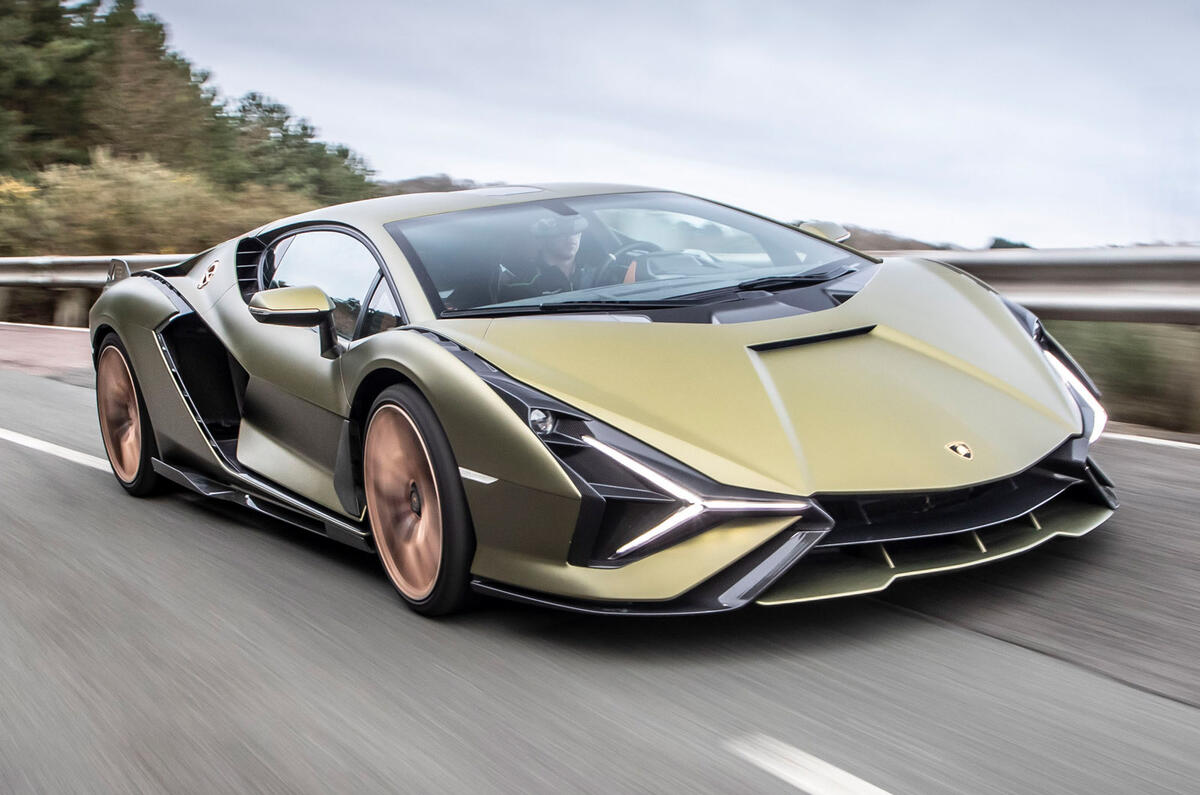
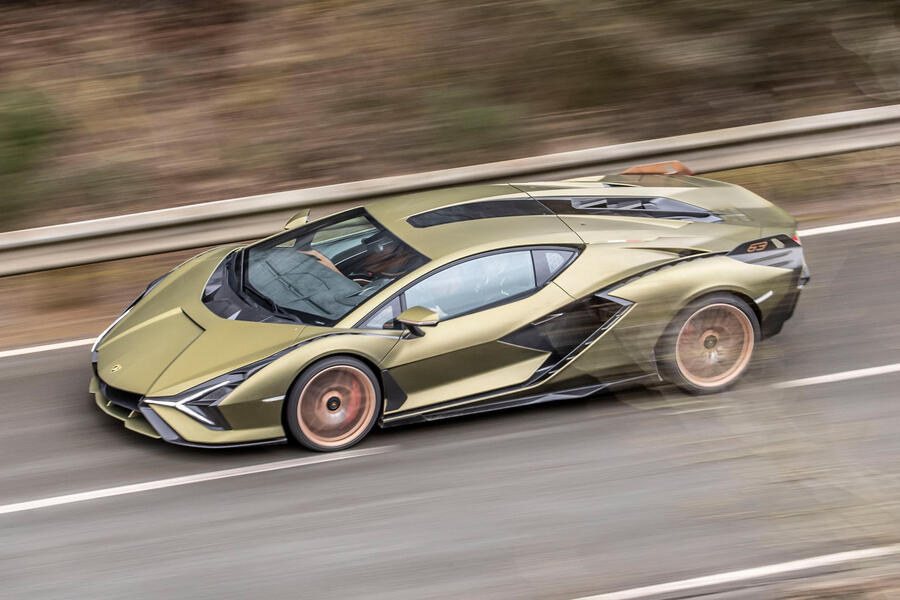
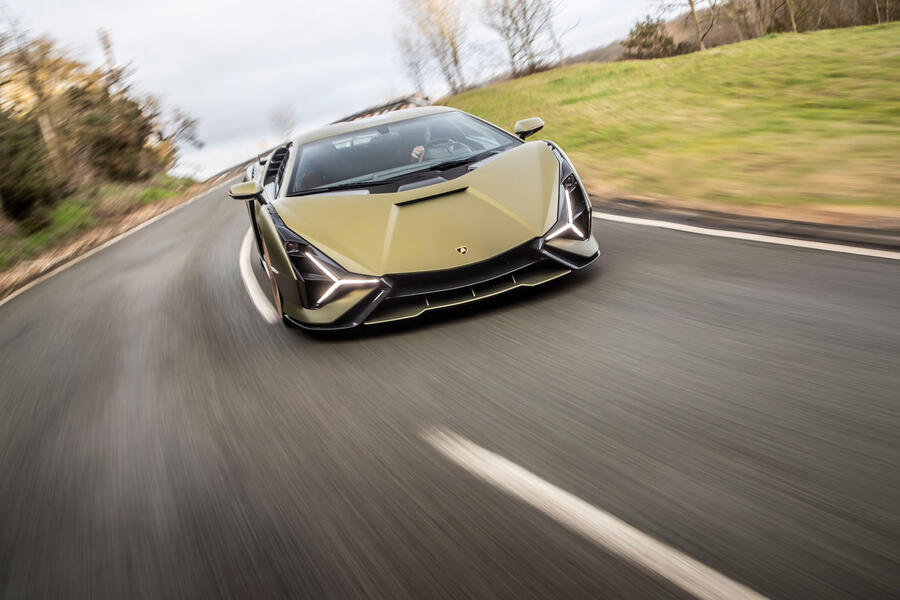
But even by normal Lamborghini standards the Sian looks futuristic and wild. Mitja Borkert, Lamborghini's head of design, went out of his way to give the Sian an especially large amount of eye-catching details, with creases and cutouts everywhere, bringing the Sian right up to the line of looking ridiculous without actually crossing it. I mean, it has fins that wouldn't have looked out of place on a 1960s Cadillac Eldorado. It's a bold choice.
The interior, by contrast, is quite restrained -- on the Lambo scale, anyway. The steering wheel is especially spartan with not a single button or switch. The Sian gets the same larger, portrait-oriented infotainment screen as the Huracan Evo, although its positioning is far from convenient, located quite low and far from the dash. Still, it makes the cabin feel more contemporary than that of, say, the Aventador. From the missile-key-style guard for the engine start button to the shapely, 3D-printed housing for the air vents and the illuminated supercapacitor sign, there are still plenty of flourishes to make you and everyone around you think you're driving a spaceship.
But what's most important about the Sian is what's under the skin. The Sian is based on the Aventador SVJ, with an identical chassis and suspension, and the same V12 engine. The Sian, however, adds an electric motor to make this Lamborghini's first production hybrid.
A quick bit of history: In the ancient before-times of 2013 when Ferrari, McLaren and Porsche launched their so-called holy trinity of hybrid supercars, Lamborghini was notably absent. At the time, Lamborghini's then-CEO Stephan Winkelmann dismissed the Ferrari LaFerrari, McLaren P1 and Porsche 918 Spyder as compromised and overweight. Adding big, lithium-ion batteries to a supercar simply wasn't on Lambo's roadmap. Fast forward a few years and Lamborghini showed the world how it would enter the world of electrification, debuting the Sian FKP 37 at the 2019 Frankfurt Motor Show.
What's a supercapacitor? Anyone who's pulled apart a broken gadget will have encountered these small cylinders soldered to circuit boards. Their ability to quickly store and deploy large amounts of energy make them great alternatives to batteries when ultra-fast recharge time is a benefit and their quick depletion isn't a problem. A flashlight using a supercapacitor instead of a battery may only run for an hour, but it will recharge in 60 seconds.
The Sian's 6.5-liter naturally aspirated V12 is the same engine you'll find in the Aventador SVJ, just with titanium inlet valves and some ECU tweaks. In the SVJ, this engines produces 759 hp; in the Sian, 774 hp. Add in the 34 hp from the electric motor and you get to the staggering total output of 808 hp. That's in a car that costs somewhere between $2 million and $3 million, depending on spec, easily four times the sticker price of the Aventador SVJ.
For both cars, accelerating to 62 mph takes 2.8 seconds and their top speeds are a claimed 217 mph. Off the line, the benefits of the Sian's electric motor are minimal. At higher speeds, however, the electric motor fills in the spaces where torque might be lacking, allowing for smoother and quicker acceleration at speed.
•6 mar 2021
El Lamborghini Sian FKP 37 es un superdeportivo híbrido de 808 hp con un enorme V12 de aspiración natural de 6.5 litros que suena glorioso. Su apariencia de nave espacial encaja con el sistema híbrido en el interior, el primer sistema híbrido con supercondensador del mundo, que está escondido en el interior. Entre 2 y 3 millones de dólares cuesta mucho, pero vale la pena.
#Lamborghini #LamborghiniSian # V12 # Híbrido
Cuando Lamborghini dice que puede tener unas horas al volante de su primer superdeportivo híbrido de producción, no dejará que un lluvioso día de invierno británico se interponga en su camino. Así que me encuentro en el corazón de la campiña británica con las llaves del Lamborghini Sian FKP 37 en la mano y el circuito de pruebas alpinas y el tazón de alta velocidad del campo de pruebas Millbrook a mi disposición.
El Sian es una novedad para Lamborghini: un superdeportivo híbrido suave. Su nombre proviene de la palabra boloñesa para relámpago. El apéndice alfanumérico se refiere a las iniciales del ex director del Grupo Volkswagen, Ferdinand Piech, el hombre responsable de incorporar a Lamborghini a la cartera del Grupo, y 1937, el año de su nacimiento. Solo se construirán 63 ejemplares, en conmemoración de la incorporación de Automobili Lamborghini en 1963. Naturalmente, ya se habla de cada automóvil.
A la vista, el Sian activa los mismos neutrones que se dispararon cuando vi por primera vez una foto del LP400 Countach. Como todos los mejores Lamborghinis, el diseño del Sian parece haber sido tomado directamente de la imaginación de un niño emocionado.
Pero incluso para los estándares normales de Lamborghini, el Sian parece futurista y salvaje. Mitja Borkert, el jefe de diseño de Lamborghini, hizo todo lo posible para darle al Sian una cantidad especialmente grande de detalles llamativos, con pliegues y recortes en todas partes, llevando al Sian hasta la línea de verse ridículo sin realmente cruzarlo. Quiero decir, tiene aletas que no se habrían visto fuera de lugar en un Cadillac Eldorado de la década de 1960. Es una elección audaz.
El interior, por el contrario, es bastante sobrio, en la escala de Lambo, de todos modos. El volante es especialmente espartano sin un solo botón o interruptor. El Sian tiene la misma pantalla de infoentretenimiento más grande y orientada a retratos que el Huracan Evo, aunque su posición está lejos de ser conveniente, se encuentra bastante bajo y lejos del tablero. Aún así, hace que la cabina se sienta más contemporánea que la de, digamos, el Aventador. Desde el protector estilo llave de misil para el botón de arranque del motor hasta la bien formada carcasa impresa en 3D para las salidas de aire y el letrero del supercondensador iluminado, todavía hay muchas florituras para que usted y todos los que lo rodean piensen que está conduciendo un astronave.
Pero lo más importante del Sian es lo que hay debajo de la piel. El Sian se basa en el Aventador SVJ, con un chasis y suspensión idénticos, y el mismo motor V12. El Sian, sin embargo, agrega un motor eléctrico para hacer el primer híbrido de producción de este Lamborghini.
Un poco de historia: en los tiempos pasados de 2013, cuando Ferrari, McLaren y Porsche lanzaron su llamada santa trinidad de superdeportivos híbridos, Lamborghini estuvo notablemente ausente. En ese momento, el entonces CEO de Lamborghini, Stephan Winkelmann, descartó al Ferrari LaFerrari, McLaren P1 y Porsche 918 Spyder como comprometidos y con sobrepeso. Agregar grandes baterías de iones de litio a un superdeportivo simplemente no estaba en la hoja de ruta de Lambo. Avance rápido unos años y Lamborghini mostró al mundo cómo ingresaría al mundo de la electrificación, presentando el Sian FKP 37 en el Salón del Automóvil de Frankfurt de 2019.
¿Qué es un supercondensador? Cualquiera que haya desmontado un dispositivo roto se habrá encontrado con estos pequeños cilindros soldados a placas de circuitos. Su capacidad para almacenar y desplegar rápidamente grandes cantidades de energía los convierte en excelentes alternativas a las baterías cuando el tiempo de recarga ultrarrápido es un beneficio y su rápido agotamiento no es un problema. Una linterna que usa un supercondensador en lugar de una batería solo puede funcionar durante una hora, pero se recargará en 60 segundos.
El V12 de 6.5 litros de aspiración natural de Sian es el mismo motor que encontrará en el Aventador SVJ, solo que con válvulas de entrada de titanio y algunos ajustes en la ECU. En el SVJ, estos motores producen 759 hp; en el Sian, 774 CV. Agregue los 34 hp del motor eléctrico y obtendrá la asombrosa potencia total de 808 hp. Eso es en un automóvil que cuesta entre $ 2 millones y $ 3 millones, según las especificaciones, fácilmente cuatro veces el precio de etiqueta del Aventador SVJ.
Para ambos autos, acelerar a 62 mph toma 2.8 segundos y sus velocidades máximas son de 217 mph. Fuera de línea, los beneficios del motor eléctrico de Sian son mínimos. Sin embargo, a velocidades más altas, el motor eléctrico llena los espacios donde podría faltar el par, lo que permite una aceleración más suave y rápida a alta velocidad.
--------------------
The Lamborghini Sian FKP 37 is a 808hp Hybrid supercar with a massive 6.5 litre Naturally Aspirated V12 that sounds glorious. It's spaceship looks are fitting of the hybrid system inside, a world's first Supercapacitor powered hybrid system, that's hidden inside. At between 2-3 million dollars it costs a lot, but it's worth it.
#Lamborghini #LamborghiniSian #V12 #Hybrid
When Lamborghini says you can have a few hours behind the wheel of its first production hybrid supercar, you're not going to let a rainy British winter's day stand in your way. So I find myself in the heart of the British countryside with the keys to the Lamborghini Sian FKP 37 in my hand, and the Millbrook proving ground's alpine test circuit and high-speed bowl at my disposal.
The Sian is a first for Lamborghini: a mild-hybrid supercar. Its name comes from the Bolognese word for lightning. The alphanumeric appendix refers to the initials of former Volkswagen Group head Ferdinand Piech -- the man responsible for bringing Lamborghini into the Group's portfolio -- and 1937, the year of his birth. Only 63 examples will be built, commemorating the incorporation of Automobili Lamborghini in 1963. Naturally, every car is already spoken for.
On sight, the Sian activates all the same neutrons that fired when I first saw a photo of the LP400 Countach. Like all the best Lamborghinis, the Sian's design appears to have been lifted directly from the imagination of an excited child.
But even by normal Lamborghini standards the Sian looks futuristic and wild. Mitja Borkert, Lamborghini's head of design, went out of his way to give the Sian an especially large amount of eye-catching details, with creases and cutouts everywhere, bringing the Sian right up to the line of looking ridiculous without actually crossing it. I mean, it has fins that wouldn't have looked out of place on a 1960s Cadillac Eldorado. It's a bold choice.
The interior, by contrast, is quite restrained -- on the Lambo scale, anyway. The steering wheel is especially spartan with not a single button or switch. The Sian gets the same larger, portrait-oriented infotainment screen as the Huracan Evo, although its positioning is far from convenient, located quite low and far from the dash. Still, it makes the cabin feel more contemporary than that of, say, the Aventador. From the missile-key-style guard for the engine start button to the shapely, 3D-printed housing for the air vents and the illuminated supercapacitor sign, there are still plenty of flourishes to make you and everyone around you think you're driving a spaceship.
But what's most important about the Sian is what's under the skin. The Sian is based on the Aventador SVJ, with an identical chassis and suspension, and the same V12 engine. The Sian, however, adds an electric motor to make this Lamborghini's first production hybrid.
A quick bit of history: In the ancient before-times of 2013 when Ferrari, McLaren and Porsche launched their so-called holy trinity of hybrid supercars, Lamborghini was notably absent. At the time, Lamborghini's then-CEO Stephan Winkelmann dismissed the Ferrari LaFerrari, McLaren P1 and Porsche 918 Spyder as compromised and overweight. Adding big, lithium-ion batteries to a supercar simply wasn't on Lambo's roadmap. Fast forward a few years and Lamborghini showed the world how it would enter the world of electrification, debuting the Sian FKP 37 at the 2019 Frankfurt Motor Show.
What's a supercapacitor? Anyone who's pulled apart a broken gadget will have encountered these small cylinders soldered to circuit boards. Their ability to quickly store and deploy large amounts of energy make them great alternatives to batteries when ultra-fast recharge time is a benefit and their quick depletion isn't a problem. A flashlight using a supercapacitor instead of a battery may only run for an hour, but it will recharge in 60 seconds.
The Sian's 6.5-liter naturally aspirated V12 is the same engine you'll find in the Aventador SVJ, just with titanium inlet valves and some ECU tweaks. In the SVJ, this engines produces 759 hp; in the Sian, 774 hp. Add in the 34 hp from the electric motor and you get to the staggering total output of 808 hp. That's in a car that costs somewhere between $2 million and $3 million, depending on spec, easily four times the sticker price of the Aventador SVJ.
For both cars, accelerating to 62 mph takes 2.8 seconds and their top speeds are a claimed 217 mph. Off the line, the benefits of the Sian's electric motor are minimal. At higher speeds, however, the electric motor fills in the spaces where torque might be lacking, allowing for smoother and quicker acceleration at speed.


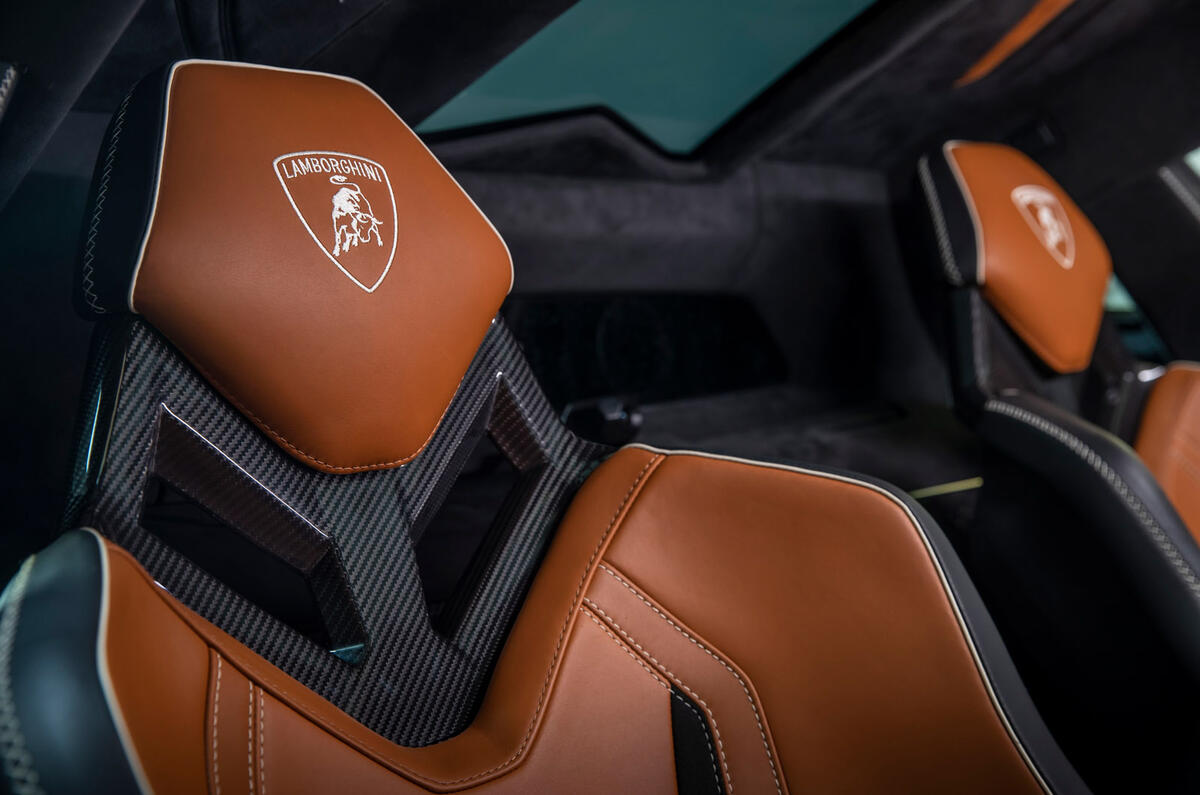









 ... va a rayar los asientos el primer día


